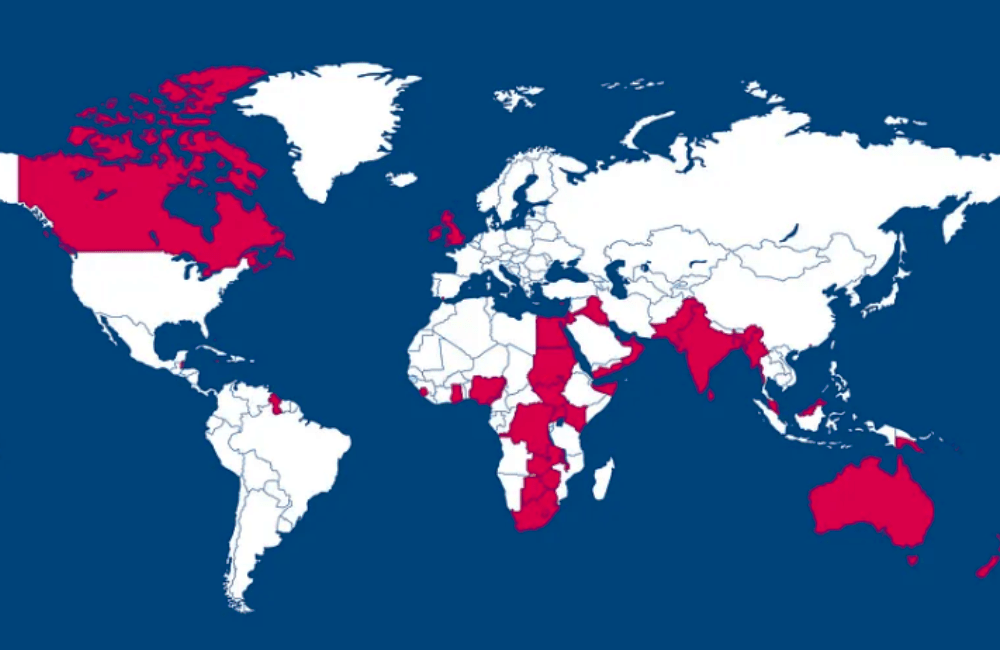
British foreign policy has been shaped by centuries of global engagement, from the days of empire to the present era of international diplomacy. Over time, the priorities of the United Kingdom (UK) have evolved in response to changing global dynamics, yet key principles such as safeguarding national security, fostering economic prosperity, and promoting democratic values have remained at the heart of the UK’s international dealings.
Today, British foreign policy is defined by its balancing act between tradition and modernity, navigating both global responsibilities and the complexities of post-Brexit reality.
Historical Legacy: The Empire and Global Power
At its height, the British Empire was the largest in history, spanning across continents and establishing the UK as a dominant global power. For much of the 19th and early 20th centuries, Britain’s foreign policy was driven by the need to protect its far-reaching empire and maintain its position as the preeminent world power.
Key elements of British foreign policy during this period included maintaining naval supremacy, securing colonial territories, and balancing European power dynamics, particularly in relation to France and Germany.
The two World Wars, however, dramatically shifted Britain’s role on the global stage. The devastation of the First World War, followed by the economic hardship of the interwar period and the horrors of the Second World War, weakened Britain’s ability to maintain its empire. By the mid-20th century, the decolonisation process had begun, with many former colonies gaining independence.
In the post-war era, the UK’s foreign policy pivoted towards rebuilding Europe and securing its place in the new global order dominated by two superpowers: the United States and the Soviet Union.
The establishment of the North Atlantic Treaty Organisation (NATO) in 1949 was a critical development in Britain’s efforts to secure its own defence and maintain influence in global affairs. At the same time, Britain became one of the founding members of the United Nations (UN), marking its shift from an imperial power to a key player in multilateral diplomacy.
The Post-War Era and the Special Relationship
In the aftermath of World War II, British foreign policy became increasingly oriented towards Europe and the Atlantic alliance. The UK’s “special relationship” with the United States became a defining feature of its international diplomacy. This close cooperation, particularly in military and intelligence matters, reinforced Britain’s security interests in a divided world.
However, Britain also sought to maintain strong ties with Europe. In 1973, the UK formally joined the European Economic Community (EEC), a precursor to the European Union (EU), marking a significant shift in its foreign policy orientation towards Europe. Membership was contentious domestically, but for many in government and foreign policy circles, it was seen as essential for the UK to maintain its influence within Europe and on the world stage.
The End of Empire and the Rise of a Global Outlook
The decline of the British Empire in the mid-20th century led to a reevaluation of the UK’s foreign policy objectives. In place of imperial ambitions, British foreign policy began to prioritise the safeguarding of national security and economic prosperity through international alliances, trade, and diplomacy.
The Cold War era brought further challenges. The UK’s security was increasingly tied to NATO and the US, and Britain’s involvement in the Korean War, the Falklands War, and the Gulf War underscored its continued military commitment to global security.
The UK was also an early advocate for global institutions like the UN and the World Trade Organization (WTO), seeking to promote international law, human rights, and free trade.
The European Union and Brexit: A New Chapter
Britain’s relationship with Europe has long been a source of both opportunity and tension. While European integration brought economic benefits, it also posed challenges to British sovereignty, leading to recurring debates over the role of the EU in British life. These tensions culminated in the 2016 Brexit referendum, where a majority of Britons voted to leave the European Union.
Brexit marked a significant shift in British foreign policy. The UK’s departure from the EU has reshaped its diplomatic and economic relationships, requiring the country to reassert its role on the global stage outside of the European framework. One of the central tenets of post-Brexit British foreign policy has been the pursuit of free trade agreements with countries around the world, from the United States and Japan to Australia and New Zealand.
The UK has also sought to deepen ties with the Commonwealth of Nations, a group of 56 countries, many of which were once part of the British Empire, and which share cultural and historical ties.
Post-Brexit, British foreign policy has embraced a more global approach, often framed under the banner of “Global Britain.” The UK has worked to reposition itself as an active participant in international organisations like the G7, the UN Security Council, and the World Health Organization, while also seeking to assert itself in emerging areas such as technology, climate change, and space exploration.
Contemporary Challenges and Priorities
In the 21st century, British foreign policy faces a number of complex challenges. The war in Ukraine, the rise of China, and ongoing tensions in the Middle East have all required the UK to balance its strategic interests with its values of democracy, human rights, and the rule of law. The UK has been a vocal supporter of Ukraine in its fight against Russian aggression, providing military aid and sanctions against Russia.
Meanwhile, relations with China are characterised by a blend of economic engagement and strategic caution. The UK is keen to maintain trade links with China, particularly in sectors like technology and finance, but concerns over human rights, particularly regarding Hong Kong and the treatment of Uighurs, have strained the relationship. The UK’s stance on China is likely to remain a key point of contention in the years ahead.
Climate change has also become a major priority in British foreign policy, with the UK committing to ambitious net-zero goals by 2050. The UK played a prominent role in the 2021 COP26 climate summit, showcasing its leadership in the global effort to combat climate change. As an island nation, the UK’s vulnerability to environmental threats makes it particularly sensitive to global climate issues, and it has positioned itself as a leader in sustainable development and green energy.
Conclusion: A Global Player in a Multipolar World
British foreign policy today is shaped by the country’s history as a global power, but it is also deeply influenced by contemporary challenges and opportunities. From the legacies of empire to its role in global institutions, the UK remains an important player on the world stage.
In the wake of Brexit, the UK is seeking to carve out a new global identity, one that balances its historical ties with Europe and the Commonwealth with a new focus on global trade, security, and climate leadership. While the world is becoming increasingly multipolar, with rising powers like China asserting themselves, the UK continues to hold significant influence in global affairs, aided by its military capabilities, its intelligence services, and its strong diplomatic network.
British foreign policy is likely to continue evolving in response to the changing geopolitical landscape, but its core principles of safeguarding security, promoting prosperity, and advancing values of democracy and human rights will remain central to its approach. The UK’s future foreign policy will be defined by how effectively it navigates the tensions between its historical alliances and its ambitions in a rapidly changing world.
 Britain Politics
Leave a comment